Why “Central”?
The name distinguishes this system from Hammar to the south and Hawizeh to the east. The Central Marshes occupy land between the Tigris and Euphrates, north of the Euphrates and west of the Tigris. Many Iraqis associate their waterways and reeds with Chibayish and its surroundings. A visitor destination’s name, however, is not identical to a registered environmental site’s boundary.
More than one kind of habitat
The Ramsar information sheet describes permanent and seasonal areas, with water ranging from fresh to brackish. Within this mosaic, open water can adjoin a dense belt of plants or a drier margin. Seasonal variation is part of wetland behaviour in principle. Deciding whether a particular change is seasonal or reflects another pressure requires evidence about that place and time.
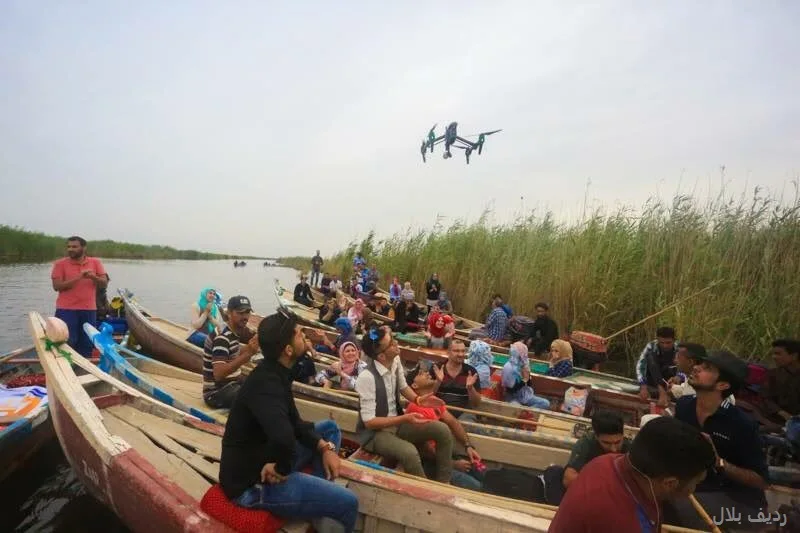
From a boat, try describing the view in units: open surface, dense stems, bank and connecting channel. These help explain why wildlife occurs in different places. Birds may appear in one patch and remain unseen in the next because their needs for food and cover differ, rather than because the wetland lacks them.
Reading the site record
The Central Marshes are Ramsar site 2241, designated on 7 April 2014, with an official registered area of 219,700 hectares. That figure identifies the designated site. It does not replace a measurement of inundation on a particular date. Likewise, a description published in 2015 cannot establish whether a boat passage is usable in 2026.
What can you observe without disturbing it?
- The edge: where does water meet vegetation, and do birds move along the margin or shelter inside it?
- The passage: is it broad and exposed, or screened by stems? Observe from an available, permitted route.
- Human use: how do boats and materials move, and where should you ask permission before taking photographs?
Do not cut reeds to open a view or create a passage to follow a sound. Part of the wetland’s value is that it is a habitat, workplace and home. Simple notes, dated and made from an appropriate position, can teach a reader more than a beautiful picture without context.
Article references
This explanatory article draws on the references below. Dated studies and images do not establish current visiting conditions.