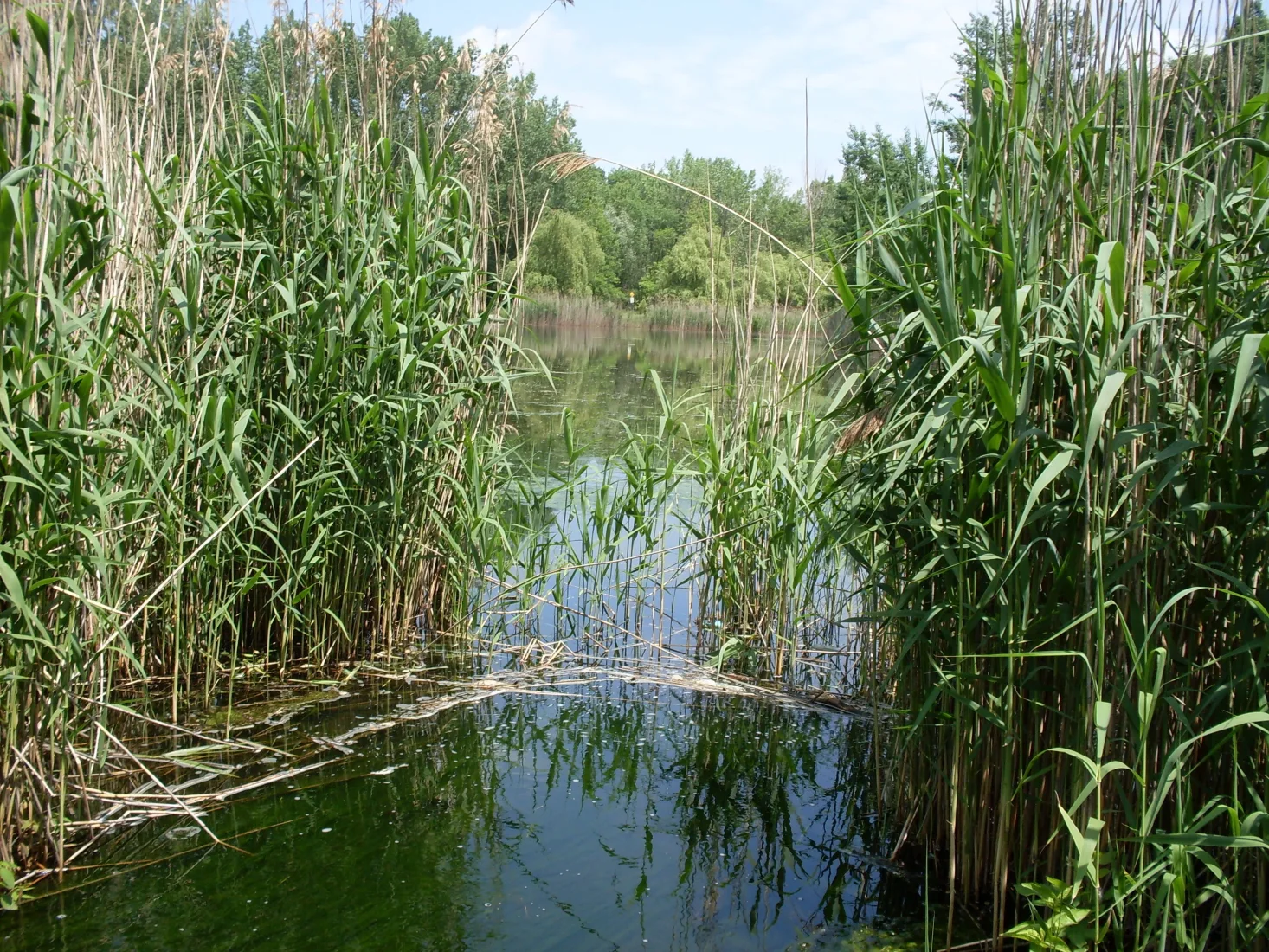
What is common reed?
Common reed, Phragmites australis, is a grass that grows in stands near water and in wetlands. It has upright stems, long leaves and spreading underground parts called rhizomes. Stems that look separate above water may be connected beneath the surface.
The scientific name helps because plant names vary between places. Arabic terms such as qasab and bardi may have local meanings that do not correspond to one scientific species in every use. A word in a photograph caption is insufficient for a firm identification. This article is not a guide to edible plants or home remedies.
Why is it more than a green backdrop?
Stems and edges provide cover, routes through vegetation and nesting places for some wildlife. Decomposing plant parts also become organic material within wetland food webs. Removing vegetation therefore changes more than the view: it can alter shelter or expose a place that was protected.
Not every dense patch performs an identical role. Habitat varies with water, depth, connections and accompanying plants. Good observation begins with a description, followed by a search for explanation, rather than an assumption that every stand of tall stems represents the same environment.
From plant to architecture
Plant materials appear in mudhif buildings, woven mats and other local work. UNESCO’s record of mudhif-building skills connects gathering materials with weaving, construction and learning through practice. This is a chain of knowledge and labour, extending beyond the visible use of a local material. The survival of water and plant resources is part of the craft’s continuing existence.
What can a short visit reveal?
- The direction of stems and the relationship between a reedbelt and moving water, viewed from an appropriate position.
- The contrast between a plant stand and nearby open water, including bird behaviour along the edge.
- Objects made from plants, after asking their owners about names, uses and permission to photograph them.
Leave plants as you find them. Do not cut a stem to expose a nest or improve a photograph. For botanical identification, record leaves, stems and the surrounding habitat from a suitable distance, then consult a specialist. Small details can distinguish plants that initially look alike.
Article references
This explanatory article draws on the references below. Dated studies and images do not establish current visiting conditions.