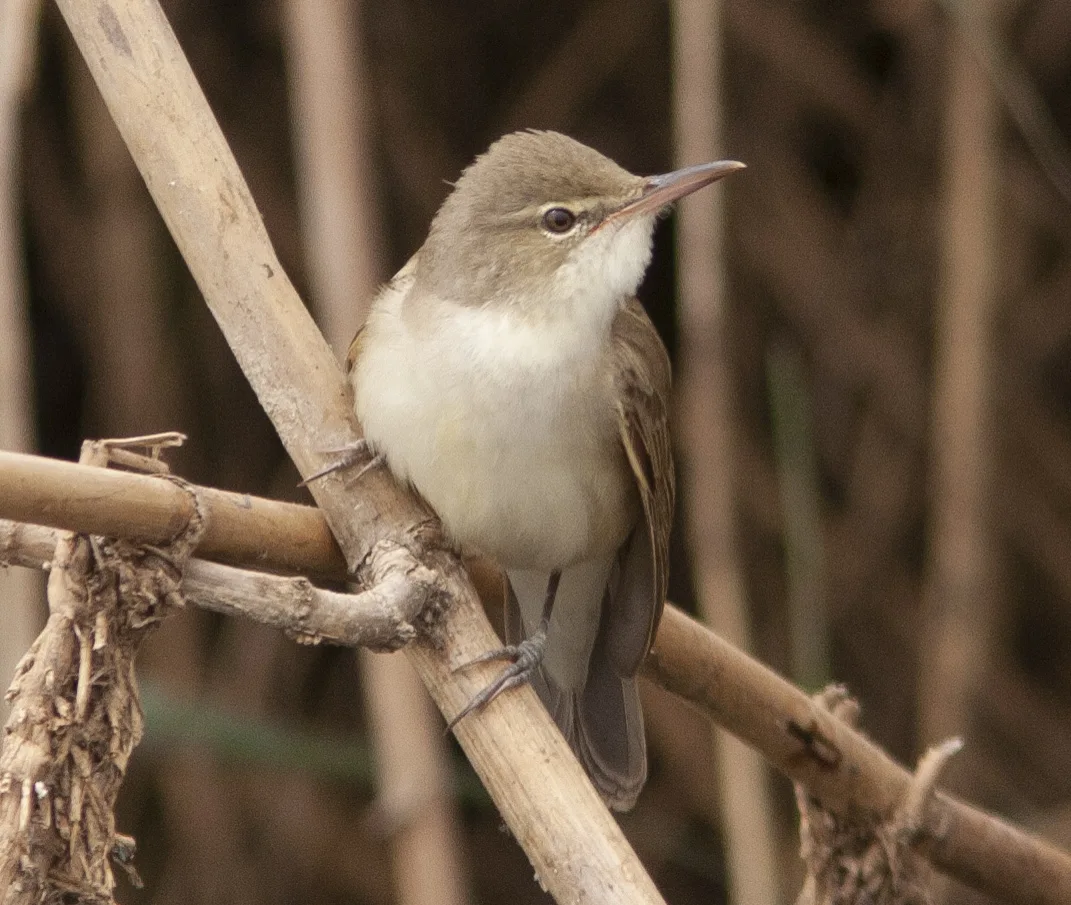
A local name and a scientific reference
The Basra reed warbler, Acrocephalus griseldis, connects an understanding of the marshes with the detail of habitat. A small bird living among vegetation can be heard before it is seen. Identifying it from a distant image requires care, because related birds may resemble one another in colour and shape.
The scientific name defines the subject of this article precisely. It is not a shortcut for naming every brown bird near water. If you take a photograph without disturbance, record its date and habitat and seek a specialist reference. Do not try to bring a bird out of the reeds to make identification easier.
What does the breeding study tell us?
A paper published in 2013 examined the species’ breeding ecology in Iraq and described its use of dense reeds at the study locations. This helps explain why protecting a bird involves more than the individual we happen to see. Nest-supporting stems, concealing vegetation, food, water and seasonal movement all belong to its surroundings.
A specific study cannot be converted into a current population estimate or a conclusion covering all Iraqi marshes. Publication date, locations and methods are part of the information’s meaning. Assessing bird numbers today requires updated, repeated surveys rather than comparisons between social-media photographs.
Why is a reed edge not empty space?
A narrow passage that appears unused to a visitor may belong to a nesting area. Cutting or burning stems, or pushing a boat into a dense stand, can alter the place on which birds depend. Remaining on the route selected by a knowledgeable companion and avoiding sensitive locations are useful practices even when no nest is visible.
An observation without approaching
- Record habitat and date rather than publishing a nest’s precise location.
- Use binoculars and wait quietly from a suitable position.
- Do not use recorded sounds to call birds towards you.
- If you notice alarm or defensive behaviour, withdraw and leave the area.
You may finish a visit without a photograph of this species. Understanding why its reed habitat matters is still a complete learning outcome, independent of any promised sighting.
Article references
This explanatory article draws on the references below. Dated studies and images do not establish current visiting conditions.