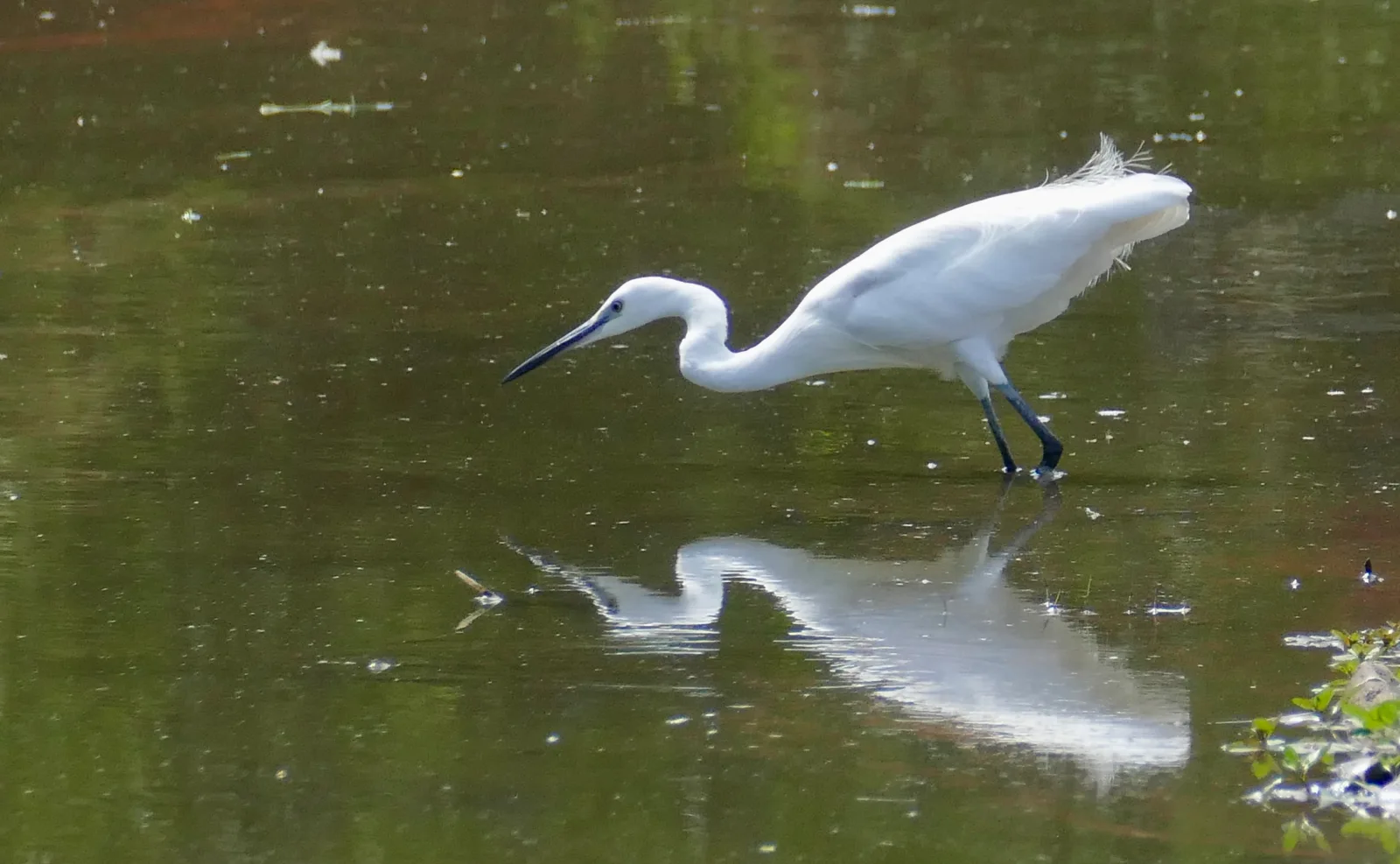
Look at the habitat first
To a first-time visitor, a marsh can appear to be one expanse of water. Birds use its parts differently: open water, plant margins, wet mud and dense reeds. Ramsar information sheets record varied species and habitats. They introduce the wetland’s ecological value, rather than promising what will appear beside a boat today.
At a distance, watch a wading bird, another swimming and a third disappearing among stems. Their behaviour offers a starting point for understanding food and habitat use. White plumage alone is insufficient for identification: herons and other birds may look similar from afar, and light or posture changes the impression.
A notebook with five fields
- Habitat: open water, shallows or a reed edge?
- Size: compare it with a familiar bird, allowing for the misleading effect of distance.
- Shape: note leg, neck and bill length, and how the bird stands.
- Behaviour: is it wading, diving or taking something from the surface?
- Timing: record the date and time, with a distant photograph if possible without disturbance.
Keep an observation “unidentified” when evidence is insufficient. An honest description is more useful than an incorrect name added to a list. Avoid publishing precise coordinates for a nest or a sensitive gathering of birds.
Residents and visitors do not form a fixed scene
Some birds use wetlands to breed; others use them during migration or winter. Two visits in different seasons should therefore not be treated as identical experiences. Water levels, quiet conditions and boat activity also influence observation. Not seeing a bird during your visit does not establish that it has disappeared from the region.
When does watching become disturbance?
If a bird changes its behaviour because of you, moves away repeatedly or stops feeding, increase your distance. Do not ask a boat operator to pursue it so that it flies in front of a camera. Do not use recorded calls to draw it out.
Audubon’s ethical photography guidance puts bird welfare and nesting success ahead of an image. Binoculars and a long lens help reveal details without entering the habitat. Learning to accept a distant view, or an uncertain identification, is part of useful observation.
Article references
This explanatory article draws on the references below. Dated studies and images do not establish current visiting conditions.