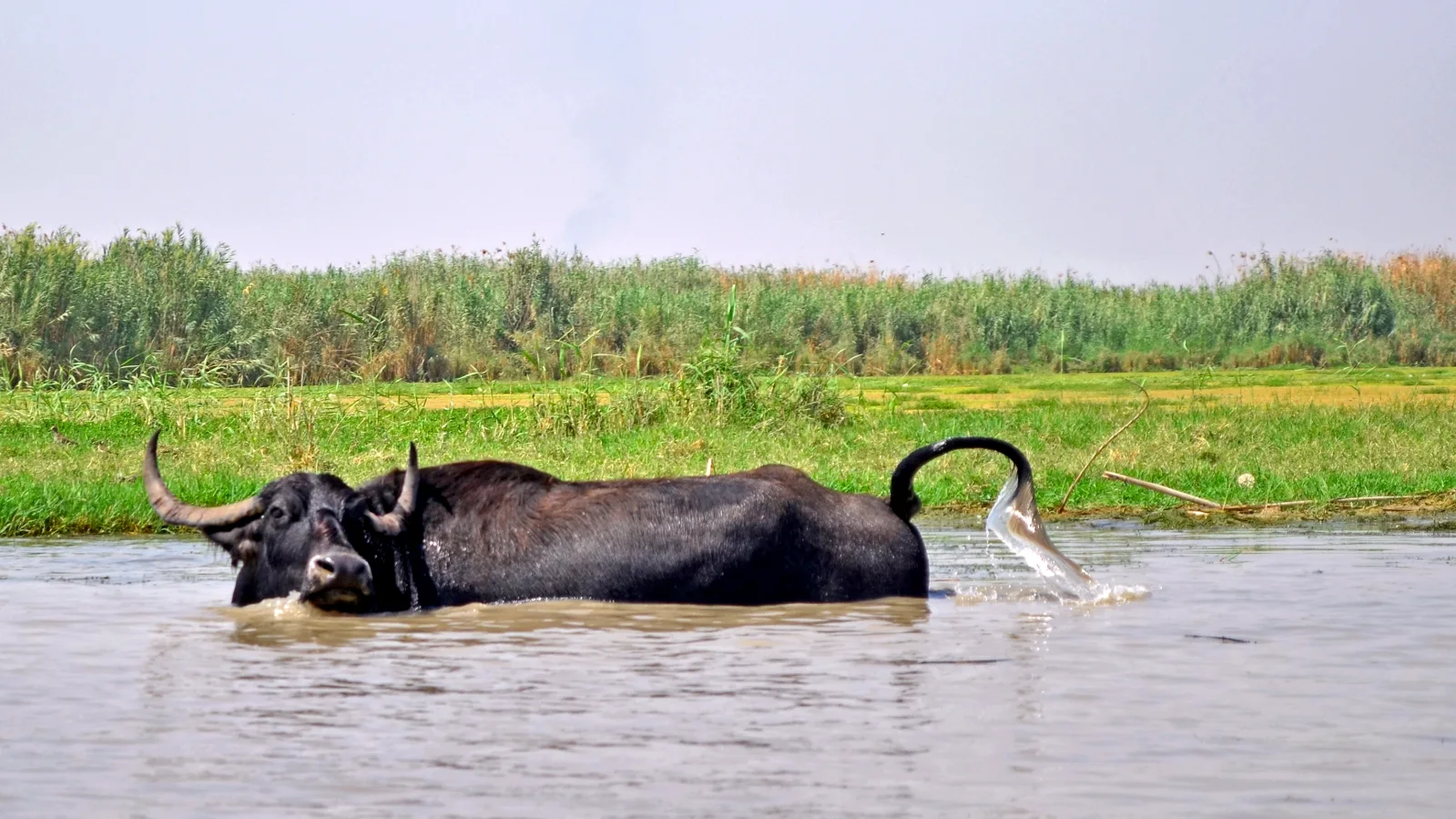
Why do buffalo enter the water?
Water buffalo are domesticated animals with owners. Wallowing or remaining in water helps them cool in hot conditions, while marsh environments provide access to water and vegetation. A herd in the wetland is therefore part of a working day that includes grazing, milking, transporting milk and caring for young animals.
An animal standing in water is not evidence that its drinking water is suitable or that all its nutritional needs are met. Water quality, feed availability and health are separate matters. A visitor can better understand the scene by asking a willing keeper about daily work, rather than inferring animal health from a passing view.
From milk to household income
Livestock studies describe buffalo as an important source of milk and dairy products in the marshes. A product depends on repeated work: providing feed, tending the herd, maintaining milking hygiene, then transporting and storing the milk. Lower production or higher feed costs reach a household’s budget even when the animals remain visible beside its home.
What happens when water becomes scarce?
In a report dated July 2023, FAO described a crisis facing buffalo keepers in southern Iraq amid water scarcity and increased salinity. Proposed support concerned water, feed and milk handling. The report documents a particular period; by itself it cannot establish conditions in every village today.
| What changes? | How can it affect the keeper? |
|---|---|
| Water quantity and quality | Drinking, cooling and animal care are affected. |
| Vegetation and feed | Providing food becomes more difficult or expensive. |
| Transport and storage | Milk reaching consumers depends on the whole working chain. |
How should you behave around a herd?
Stay with your companion and at a distance agreed by the animals’ owner. Do not feed buffalo with food brought for your outing, stand between a mother and her young, or surround an animal with a boat for a photograph. Ask permission before photographing people or milking: a household and its herd are a workplace and livelihood.
When buying a local product, ask about its source and storage. Supporting producers begins with a clear, respectful exchange. It does not require turning people’s daily lives into a visitor performance.
Article references
This explanatory article draws on the references below. Dated studies and images do not establish current visiting conditions.