Begin with sunlight, then look below the surface
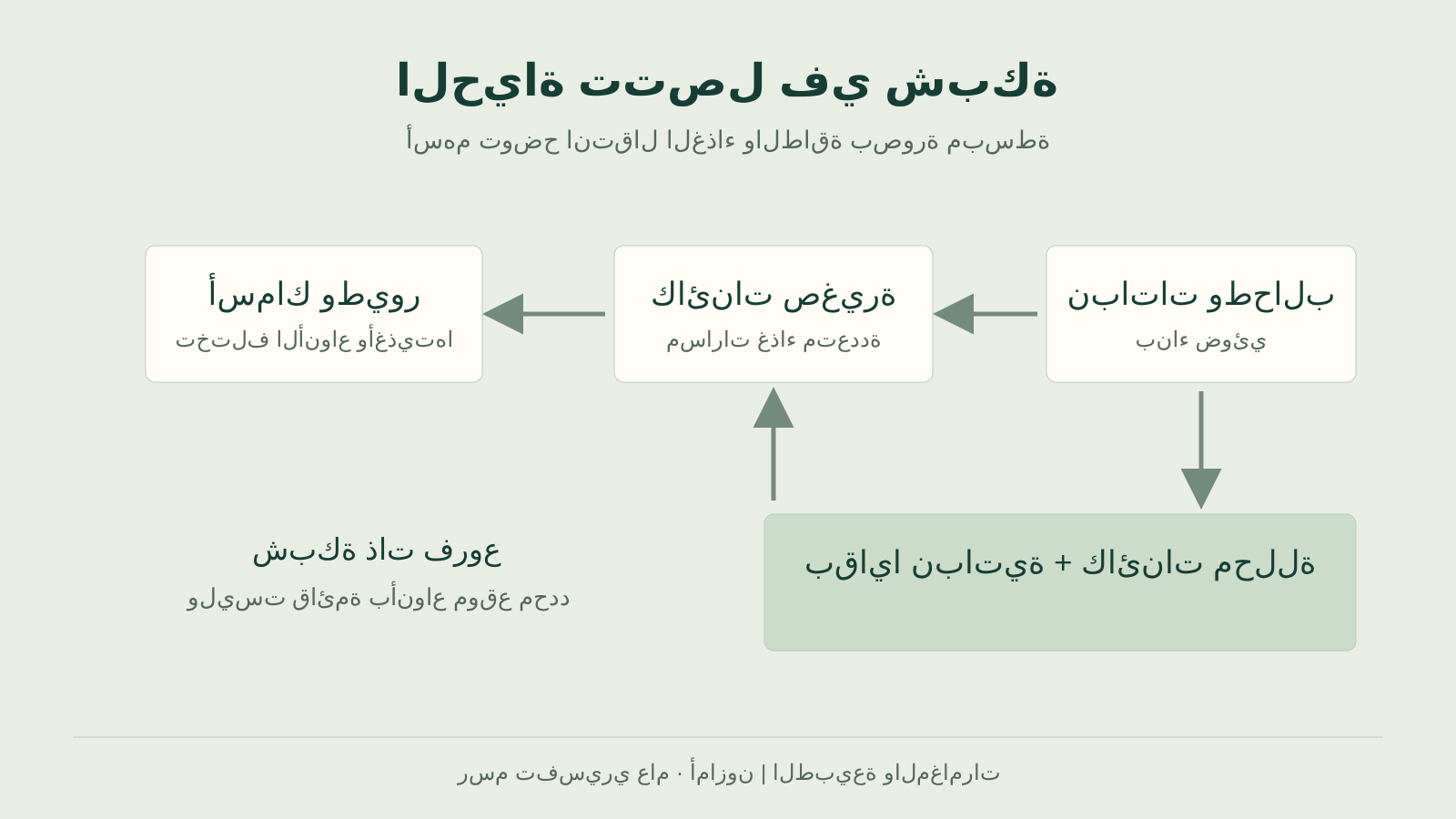
Reeds, birds and boats attract attention quickly in a marsh. Essential parts of its food system are much less visible. Plants and algae use sunlight in photosynthesis. The organic material they produce begins pathways that support other organisms, directly or indirectly.
The US Environmental Protection Agency explains how wetland productivity connects decomposing plant material with microorganisms, invertebrates, fish and other life. This is a framework for understanding ecological function. It is not a list asserting that every species eats the same thing in every marsh.
Where does a dead leaf go?
Plant parts can fall into water or mud, where decomposers help break them down. The remains and their associated microscopic life become resources for small organisms. Some fish or birds eat organisms from different levels. A branching web therefore represents the relationships better than one fixed chain.
Distinguish natural plant remains from human waste. Plastic, fuel residues and detergents do not become useful contributions simply because they enter water. Deliberately leaving food scraps for wildlife can also alter behaviour and attract animals towards people and boats.
Water and vegetation influence the relationships
| Habitat element | Connection to the food web |
|---|---|
| Plants | Produce organic material, provide cover and offer surfaces on which other organisms live. |
| Water | Provides a medium for life and movement; quantity and quality affect organisms. |
| Edges and shallows | Offer places used by different species for feeding and shelter. |
A family observation activity
From a position agreed with your companion, draw three columns: “what we can see”, “what we observed” and “what we need to check”. You might record a bird picking something from the water. Do not call that object a fish unless it is clearly visible.
Draw an arrow meaning “may provide food for”, adding a question where the relationship is uncertain. Do not collect animals or cut reeds to complete the drawing. The activity’s value lies in separating observation from guesswork, and recognising that life absent from a photograph may support much of what appears within it.
Article references
This explanatory article draws on the references below. Dated studies and images do not establish current visiting conditions.